The Mediterranean Sea holds many secrets within its turquoise depths, but few islands possess a legacy as layered and magnetic as Ibiza. While the modern world often identifies this Balearic gem with the thumping bass of world-class nightlife, its true identity is rooted in a history that stretches back over two and a half millennia. To understand the soul of the island, one must travel back to 654 BC, when Phoenician settlers first stepped onto its shores and christened it 'Ibossim.' This was not merely a tactical outpost for trade; it was a land dedicated to Bes, the ancient Egyptian deity of music, dance, and protection. This divine dedication set the stage for an island that would, for centuries, remain a sanctuary for the expressive and the brave.
The choice of Bes as the island’s patron is particularly insightful when examining the cultural fabric of Ibiza. Bes was a unique figure in the ancient pantheon—a dwarf god with a jovial yet fierce countenance, often depicted with a lion-like mane and a tongue-out expression to ward off evil spirits. Unlike the distant, stoic gods of the high heavens, Bes was a god of the home and the heart. He was the protector of pregnant women, the guardian of children, and, most famously, the master of music and revelry. By naming the island Ibossim, the Phoenicians were effectively claiming a territory where joy was a sacred duty and where the rhythms of life were protected by divine intervention. This ancient lineage suggests that Ibiza’s reputation as a global hub for music is not a modern accident, but rather a fulfillment of a 2,600-year-old destiny.
The Phoenician influence extended far beyond spiritual nomenclature. These master mariners and traders recognized the strategic importance of the island’s natural harbor and its wealth of 'white gold'—salt. The salt flats of Ses Salines, which are still operational and breathtakingly beautiful today, were established by these early settlers. For the Phoenicians, salt was a vital commodity for preserving food and facilitating long-distance maritime trade. This industry transformed Ibossim into a thriving economic powerhouse in the ancient world, attracting merchants from across the Mediterranean and creating a melting pot of cultures that has defined the island’s welcoming, cosmopolitan atmosphere ever since.
One cannot discuss the historical depth of Ibiza without mentioning the Necropolis of Puig des Molins. This 'Hill of Windmills' serves as one of the most significant and best-preserved Phoenician-Punic cemeteries in the world. With over 3,000 tombs carved into the rock, it provides an unparalleled glimpse into the funerary rites and daily lives of the island's early inhabitants. Excavations have revealed intricate terracotta figurines of the goddess Tanit—the consort of Ba'al Hammon and the protector of Ibiza—alongside jewelry, amulets, and pottery. These artifacts tell a story of a sophisticated society that valued art, spirituality, and the preservation of heritage, further cementing Ibiza’s status as a UNESCO World Heritage site.
As the centuries progressed, the island transitioned through various hands, from the Carthaginians to the Romans, who renamed it 'Ebusus.' Despite the changing empires, the core identity of the island remained remarkably resilient. The Roman era saw the island become a municipality, continuing its trade of salt and purple dye. However, the spiritual undercurrent of the Phoenician Bes never truly faded. The local customs, folk dances, and even the traditional architecture—characterized by thick white walls and flat roofs—carry whispers of North African and Levantine influences that date back to those original settlers. This architectural style, known as the 'finca,' is a masterclass in sustainable design, keeping interiors cool during the scorching Mediterranean summers without the need for modern technology.
In the modern era, the 'spirit of Bes' has manifested in the island’s legendary bohemian and artistic movements. In the 1960s and 70s, Ibiza became a refuge for writers, painters, and musicians seeking an escape from the rigid structures of post-war Europe and the United States. This era of 'Adlib' fashion and 'flower power' was a natural evolution of the island’s ancient ethos—a place where individuality is celebrated and the creative spirit is shielded from the mundane. Today, when thousands gather to watch the sunset at Benirràs beach to the sound of rhythmic drumming, they are participating in a ritual that would have felt entirely familiar to the ancient inhabitants of Ibossim.
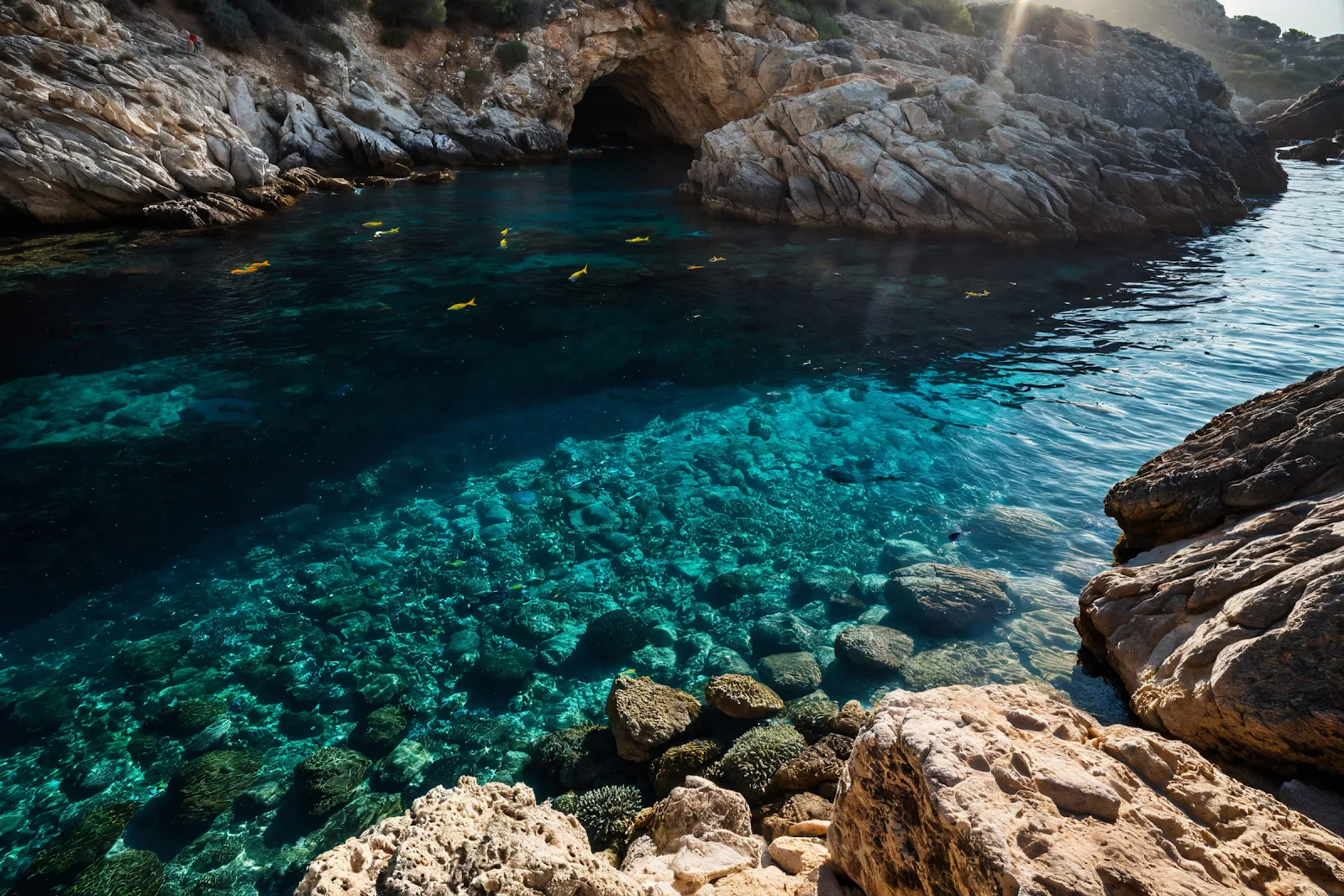
Furthermore, the environmental richness of Ibiza provides a stunning backdrop to its historical narrative. The island is home to the Posidonia oceanica, an ancient seagrass that forms vast underwater meadows. These meadows, some of which are estimated to be over 100,000 years old, are responsible for the incredible clarity and turquoise hue of the waters surrounding the island. This biological marvel acts as a carbon sink and a nursery for marine life, ensuring that the natural beauty of the island remains as pristine as it was when the Phoenician ships first appeared on the horizon. The preservation of these meadows is a modern priority that echoes the ancient reverence for the land and sea.
Ultimately, Ibiza is a land of beautiful contradictions. It is an island where the ancient and the avant-garde coexist in a vibrant dance. To walk through the cobbled streets of Dalt Vila, the fortified high town of Ibiza City, is to walk through layers of time. From the Phoenician foundations to the Renaissance walls built to ward off Berber pirates, every stone has a story to tell. For the traveler who looks beneath the surface, Ibiza offers a profound sense of continuity. It is not just a destination; it is a living monument to the enduring human desire for protection, community, and the transcendent power of music. Whether you are exploring a hidden cove, dining on fresh Mediterranean fare, or losing yourself in the rhythm of a dance floor, you are partaking in a legacy that began with the god Bes and continues to thrive in the hearts of all who visit this enchanted island.

No comments:
Post a Comment